
How far can cybercriminals go?
Can they breach your home network?
Could they get through your work computers?
What about big organizations? What if they climbed all the way up to the United States government?
That’s not a hypothetical.


How far can cybercriminals go?
Can they breach your home network?
Could they get through your work computers?
What about big organizations? What if they climbed all the way up to the United States government?
That’s not a hypothetical.

An Arizona family was recently in the news warning others about how they were the target of a ransom call in which scammers used AI (artificial intelligence) to clone their daughter’s voice to convince the parents they had kidnapped their daughter, with the apparent goal of extorting money.

Before you think about purchasing new servers, ask yourself some crucial questions that can help you make informed decisions, minimize risks, and maximize the benefits of the upgrade. By carefully evaluating factors such as performance requirements, scalability, budget constraints, and future business needs, you can ensure a smooth transition to new server infrastructure.

What is IcedID?
Have you ever had personally identifiable information exposed in a data breach? Whether it was your own or somebody else’s, cyber events like this are increasingly common nowadays. In fact, 422M people had their information exposed in 2022.
Depending on what you do for work, you may be responsible for protecting the private data of all sorts of people, from fellow coworkers to clients to government organizations with whom you do business! Couple that with the fact that 95% of data breaches are borne of human error, and you start to see that it’s a matter of if and not when you will be compromised in a breach.

There’s a whole new type of malware that has been making the rounds as of late. Whether you’re running the latest version of Windows or Mac, their built-in browser defenses are always watching out for threats — but the new IcedID malware has a few new tricks up its sleeve.
Introduction
Cyber compliance is the process of ensuring that organizations adhere to laws, regulations, and standards related to the use of technology. It is an essential part of any organization’s security strategy as it helps protect against cyber threats and data breaches!
If that’s not a compelling enough reason, you could also be held liable in an audit if you are caught slacking on cybersecurity.

Introduction
Do you use Siri? What about Google Home or the Amazon Alexa? Some other, similar smart device hooked up to your home or office? Then you’ll want to read on about this latest vulnerability in your network.
Researchers at the University of Texas San Antonio and University of Colorado Colorado Springs have discovered a potential malware technique capable of sneaking onto voice-controlled devices to take control of the system or network.

We bet that you’re a good, hardworking individual who doesn’t want to cause problems for your company. You wouldn’t intentionally leak important information that would compromise the organization in anyway!

With the rise of remote work, bring your own device (BYOD) has become more prevalent, allowing employees to use their personal devices for work. But this flexibility introduces new security challenges for companies. The use of personal devices to access work-related data may expose sensitive information to potential threats.
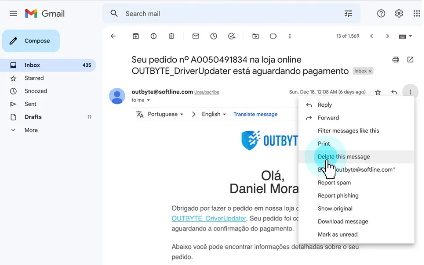
No matter what email platform you use, who you connect with, and where you choose to give out your email address, we all deal with it: Spam messages.
Sometimes, spam is clearly recognizable as fake. Others look like viable sales pitches…and sometimes they’re disguised as phishing messages to make you think that you’re interacting with something or someone that you’re not.